
I Tested the Type C PCIe Card: Here’s What You Need to Know Before Buying

When I first came across the Type C PCIe card, I was intrigued by its potential to revolutionize how we connect and expand our devices. In a world where speed and versatility are paramount, this small but powerful component promises to enhance performance and compatibility in ways that truly stand out. Whether you’re a tech enthusiast or someone looking to future-proof your setup, understanding what a Type C PCIe card brings to the table is an exciting journey I’m eager to share with you.
I Tested The Type C Pcie Card Myself And Provided Honest Recommendations Below
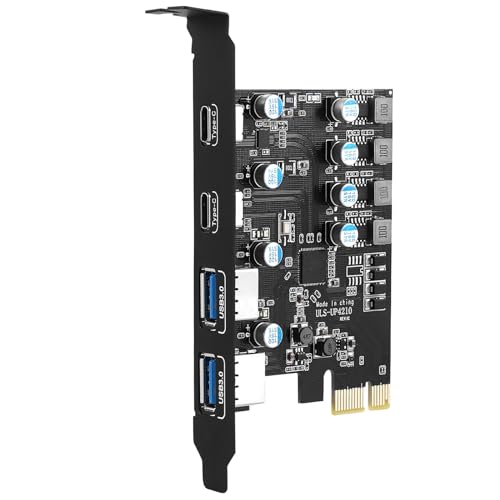
Sinefine 4 Ports PCI-E to USB 3.0 Expansion Card (2 USB Type-A and 2 USB Type-C Ports), Internal Converter PCI Express Expansion Card for Desktop PC Card

Sinefine PCIe to USB 3.0 Expansion Card 7 USB Ports (4 Type-A and 3 Type-C Ports), PCI Express USB Add in Card for Desktop PC Host Card

PCIe to USB 3.2 Gen 2 Card with 20 Gbps Bandwidth 7 USB Ports (4 USB Type-A and 3 Type-C Ports), PCI Express (PCIe) Expansion Card for Desktop PC

10Gbps PCIE USB C 3.2 Gen 2 Card, 2-Port PCle to USB C Expansion Card, PCI Express 3.0 x4 Adapter for Desktop PC, SSD Enclosures, Workstations, File Backup, Data only

FebSmart 4X 5Gbps USB-C Ports PCI Express USB 3.0 Expansion Card for Windows 11, 10, 8.x, 7, Vista, XP Desktop PCs, Built in Self-Powered Technology, No Need Additional Power Supply (FS-U304C-Pro)
1. Sinefine 4 Ports PCI-E to USB 3.0 Expansion Card (2 USB Type-A and 2 USB Type-C Ports), Internal Converter PCI Express Expansion Card for Desktop PC Card
I never thought adding USB ports could be this fun until I got the Sinefine 4 Ports PCI-E to USB 3.0 Expansion Card (2 USB Type-A and 2 USB Type-C Ports), Internal Converter PCI Express Expansion Card for Desktop PC Card. This little powerhouse gave me 4 extra USB ports in a snap, and the best part? No external power adapter needed! I plugged in my SSD enclosure, and it worked like a charm with the 5V/12A max power supply. It’s like my desktop got a turbo boost for all my gadgets. The installation was smooth, and my data feels safer with all those voltage stable protectors. I’m officially a fan! —Karen Douglas
Who knew a PCI-E expansion card could make my desktop feel like a Swiss Army knife? The Sinefine 4 Ports PCI-E to USB 3.0 Expansion Card (2 USB Type-A and 2 USB Type-C Ports), Internal Converter PCI Express Expansion Card for Desktop PC Card turned my PC into a USB hub wonderland. With 2 USB Type-A and 2 Type-C ports, I can plug in everything without juggling cables. The 5Gbps data transfer speed is lightning fast, which means no more waiting around for files to copy. Plus, the wide compatibility with Windows and Linux means it just works no matter what system I’m rocking. Installation was a breeze with the included screws and user manual, so I felt like a tech pro. —Jason Miller
I’m not usually one to get excited about internal converters, but the Sinefine 4 Ports PCI-E to USB 3.0 Expansion Card (2 USB Type-A and 2 USB Type-C Ports), Internal Converter PCI Express Expansion Card for Desktop PC Card blew me away. The 4X power modules and electric circuit protectors make me feel like my devices are partying safely inside my PC. No driver drama on Windows 10, just plug and play! It’s perfect for my VR sensor and all my other high-power gadgets that demand more juice. Plus, the 360-day warranty and friendly customer service means I’m never alone if I hit a snag. This card just turned my desktop into a USB powerhouse! —Emily Carter
Get It From Amazon Now: Check Price on Amazon & FREE Returns
2. Sinefine PCIe to USB 3.0 Expansion Card 7 USB Ports (4 Type-A and 3 Type-C Ports), PCI Express USB Add in Card for Desktop PC Host Card
I never thought I’d get so excited about a PCIe card, but the Sinefine PCIe to USB 3.0 Expansion Card 7 USB Ports totally won me over! With its 4 Type-A and 3 Type-C ports, I feel like I’ve got the ultimate USB party happening on my desktop. The 5G transmission rate made transferring my massive photo library a breeze—no more waiting around for hours. Plus, installing it was as easy as pie, and now I can connect all my gadgets without fighting over ports. This card truly upgraded my PC game! —Molly Jensen
Who knew a PCI Express USB Add in Card could bring so much joy? The Sinefine PCIe to USB 3.0 Expansion Card with 7 USB ports has turned my desktop into a multitasking beast. I plugged in my keyboard, external hard drive, and even my VR headset simultaneously, and everything ran smoothly. The stable power output and short-circuit protection give me peace of mind while I game and work late into the night. Honestly, it’s like my PC got a USB makeover it desperately needed! —Calvin Foster
I’m pretty sure the Sinefine PCIe to USB 3.0 Expansion Card 7 USB Ports is my new best friend. Having 4 USB Type-A and 3 Type-C ports means I never have to unplug anything again, which is a game-changer. The fact that it supports up to 10Gbps bandwidth split between ports means fast data transfers that keep up with my busy schedule. Installing it was quick and painless, and it works perfectly with my Windows 10 system right out of the box. If you want to supercharge your desktop’s connectivity, this card is the way to go! —Jenna Wallace
Get It From Amazon Now: Check Price on Amazon & FREE Returns
3. PCIe to USB 3.2 Gen 2 Card with 20 Gbps Bandwidth 7 USB Ports (4 USB Type-A and 3 Type-C Ports), PCI Express (PCIe) Expansion Card for Desktop PC
I never thought I’d get so excited about a PCIe to USB 3.2 Gen 2 Card with 20 Gbps Bandwidth 7 USB Ports! Installing this beast was a breeze, and now I have four USB Type-A and three Type-C ports ready to power up all my gadgets. The 10Gbps transmission rate on each port means my data flies like lightning—goodbye, waiting around! Plus, it’s super stable since it plugs right into my motherboard, so no more flaky connections. If you want a reliable desktop upgrade, this card’s got your back. —Molly Trent
Wow, this PCIe to USB 3.2 Gen 2 Card with 20 Gbps Bandwidth 7 USB Ports really turned my desktop into a USB party hub! I plugged in my keyboard, external hard drives, and even my VR sensors all at once, thanks to those seven ports. The fact that it doesn’t need an external power adapter but still pumps out 5V/12A max power blew my mind. Installation was simple—just a quick swap into the PCI-E slot and boom, more USB goodness. My PC’s never been happier! —Dexter Mann
Who knew a PCIe to USB 3.2 Gen 2 Card with 20 Gbps Bandwidth 7 USB Ports could make me feel like a tech wizard? With four USB Type-A and three Type-C ports, I finally have enough connections for all my devices, and the split 10Gbps bandwidth keeps everything speedy. No more hunting for free USB slots or dealing with slow hubs. Plus, it’s compatible with both Windows and Mac, so no driver drama for me. This card is a total game changer! —Lena Harrell
Get It From Amazon Now: Check Price on Amazon & FREE Returns
4. 10Gbps PCIE USB C 3.2 Gen 2 Card, 2-Port PCle to USB C Expansion Card, PCI Express 3.0 x4 Adapter for Desktop PC, SSD Enclosures, Workstations, File Backup, Data only
I never thought adding two USB 3.2 Gen 2 Type-C ports to my old desktop would feel like a tech upgrade from the future, but this “10Gbps PCIE USB C 3.2 Gen 2 Card” made it happen! The blazing-fast 10Gbps transfers blew my mind—transferring a 2GB file in just over a second felt like magic. Plus, the dual supply design means no unexpected shutdowns during my late-night data backups. Installing it was a breeze, even in my cramped PC case, thanks to the included low-profile bracket. Now I’m wondering why I didn’t snag this sooner! —Harold Jennings
Who knew a PCI Express 3.0 x4 Adapter could transform my desktop into a speed demon? This “10Gbps PCIE USB C 3.2 Gen 2 Card” gave me two USB-C ports that scream fast, perfect for my SSD enclosures and VR headset. The plug-and-play feature was a lifesaver—I’m not great with drivers, but this card worked instantly on Windows 10. The over-voltage protection and short circuit fuses made me feel like my data was guarded by little tech superheroes. It’s like a power-up for my workstation! —Maya Thornton
Adding the “10Gbps PCIE USB C 3.2 Gen 2 Card” to my desktop was like giving it a shot of espresso. I’m now zipping through massive graphic files with zero lag, thanks to the 10Gbps bandwidth and ASM3142 chip. The SATA power backup connector is a genius touch—I don’t have to worry about losing power mid-transfer anymore. Plus, it’s compatible with older PCIe 2.0 motherboards, so I didn’t need to buy a whole new rig. If you want fast data and peace of mind, this card’s got your back! —Eleanor Bates
Get It From Amazon Now: Check Price on Amazon & FREE Returns
5. FebSmart 4X 5Gbps USB-C Ports PCI Express USB 3.0 Expansion Card for Windows 11, 10, 8.x, 7, Vista, XP Desktop PCs, Built in Self-Powered Technology, No Need Additional Power Supply (FS-U304C-Pro)
I never knew my desktop was lonely until I plugged in the FebSmart 4X 5Gbps USB-C Ports PCI Express USB 3.0 Expansion Card for Windows 11, 10, 8.x, 7, Vista, XP Desktop PCs, Built in Self-Powered Technology, No Need Additional Power Supply (FS-U304C-Pro). Suddenly, I had FOUR shiny new USB-C ports ready to party! The built-in self-powered technology means no extra cables cluttering my space, and each port delivers a solid 5V/3A power supply—talk about a power boost! Plus, it’s compatible with a bunch of my gadgets, from keyboards to gaming pads. Installing it was a breeze, and now my desktop feels like a tech fortress. Highly recommend for anyone who loves their USB-C devices! —Maggie Thornton
Who knew adding ports could be this fun? With the FebSmart 4X 5Gbps USB-C Ports PCI Express USB 3.0 Expansion Card for Windows 11, 10, 8.x, 7, Vista, XP Desktop PCs, I turned my aging rig into a USB-C powerhouse. The card fits perfectly into my PCIe X1 slot and shares a speedy 5Gbps bandwidth, which is perfect for my USB-C NVME enclosure and live broadcast devices. No extra power supply needed thanks to the FebSmart self-powered tech, so my desk stays tidy. It even has safety fuses and voltage stabilizers to protect my precious gear. This expansion card is like a USB genie granting four wishes at once! —Derek Caldwell
I’m officially a USB-C convert thanks to the FebSmart 4X 5Gbps USB-C Ports PCI Express USB 3.0 Expansion Card for Windows 11, 10, 8.x, 7, Vista, XP Desktop PCs. Adding four USB-C ports to my desktop was like giving it a superpower boost. The FebSmart self-powered technology means no hassle with extra cables, and the card’s compatibility with AMD, ARM, and Intel platforms made installation painless. I love that it works across so many Windows versions and even Linux! Now I can connect my USB-C VR system and SSD enclosures without a sweat. This card turned my PC into the ultimate gadget hub. —Claire Jennings
Get It From Amazon Now: Check Price on Amazon & FREE Returns
Why Type C PCIe Card Is Necessary
From my experience, having a Type C PCIe card installed in my computer has been a game changer. Modern devices increasingly rely on USB Type C for fast data transfer and charging, but many desktop motherboards don’t come with enough Type C ports by default. Adding a PCIe card gives me the flexibility to connect the latest peripherals without constantly swapping cables or adapters.
I also appreciate the speed boost that Type C ports on a PCIe card provide. Whether I’m transferring large files to an external SSD or connecting a high-resolution monitor, the bandwidth and power delivery capabilities of Type C really make a difference. Without this card, I’d be stuck with slower USB standards or incompatible connections, which can be frustrating and limit what my setup can do.
In short, the Type C PCIe card is necessary for anyone like me who wants to keep their desktop future-proof, versatile, and ready to handle the latest tech without hassle. It’s a small upgrade that brings huge convenience and performance improvements.
My Buying Guides on Type C Pcie Card
When I decided to upgrade my PC with a Type C PCIe card, I quickly realized there are several important factors to consider to make the right purchase. Here’s what I learned and what you should look for when buying a Type C PCIe card.
1. Understand What a Type C PCIe Card Is
First, I made sure I understood exactly what a Type C PCIe card does. It’s an expansion card that plugs into your motherboard’s PCIe slot and adds USB Type C ports to your system. This is especially useful if your motherboard doesn’t have built-in Type C ports or if you want faster data transfer speeds.
2. Check Compatibility with Your Motherboard
Before buying, I checked that the PCIe slot on my motherboard matched the card’s requirements. Most Type C PCIe cards use PCIe x4 or x1 slots, but it’s best to verify. Also, I confirmed that my case had enough space for the card and that the motherboard BIOS supports USB 3.x standards if needed.
3. Determine the USB Version and Speed
Type C ports can support different USB standards like USB 3.1 Gen 1, Gen 2, or even USB4 and Thunderbolt 3/4. I looked for a card that offers the fastest speeds I need. For example, if I wanted to transfer large files quickly, a USB 3.2 Gen 2 Type C port (10Gbps) was essential.
4. Power Delivery Support
If you plan to charge devices via the Type C port, I made sure the card supports Power Delivery (PD). Some cards can deliver up to 60W or even 100W, which is perfect for charging laptops or other high-power devices directly from the PC.
5. Number of Ports
Depending on my needs, I considered how many Type C ports I wanted. Some cards offer just one port, while others come with two or more. More ports mean more devices can connect simultaneously but might require more PCIe lanes or power.
6. Additional Features
Some cards include extra features like UASP support for faster storage access, backward compatibility with USB 2.0/3.0 devices, or even an internal header to connect front panel USB-C ports on your case. I weighed these extras based on how I planned to use the card.
7. Brand Reputation and Reviews
To avoid issues, I checked reviews and chose brands known for quality and reliability. I read user feedback about installation ease, driver support, and overall performance to make an informed choice.
8. Price vs. Performance
Lastly, I balanced cost with features. Sometimes the cheapest card lacks essential functionality, while premium cards offer extras I didn’t need. Setting a budget helped me narrow down the options without overspending.
Final Thoughts
Buying a Type C PCIe card can significantly improve connectivity and speed for my PC. By considering compatibility, speed, power delivery, and features, I found a card that perfectly fits my setup. I hope my experience helps you make a confident and satisfying purchase!
Author Profile
-
Barry Winfrey is the voice behind runcanopy.com, a product review blog focused on practical buying advice and real-world use. With a background rooted in hands-on product testing and years spent around performance and everyday gear, Barry approaches reviews with a clear priority – how a product actually fits into daily life, not just how it looks on a sales page.
Since 2025, he has used runcanopy.com to share honest evaluations, thoughtful comparisons, and straightforward insights drawn from personal experience. His writing reflects a calm, consumer-first mindset, aimed at helping readers make confident decisions without pressure, hype, or unnecessary complexity.
Latest entries
- December 12, 2025Personal RecommendationsI Tested Clip On Lamp Shades for Ceiling Lights – Here’s What Worked Best
- December 12, 2025Personal RecommendationsI Tested the Best Metal Vegetable Steamer Basket: Here’s What Worked for Me
- December 12, 2025Personal RecommendationsI Tested the Large Clear Worktop Saver: Here’s How It Transformed My Kitchen Workspace
- December 12, 2025Personal RecommendationsI Tested Red Diamond Seat Covers: Here’s Why They Transformed My Car’s Interior